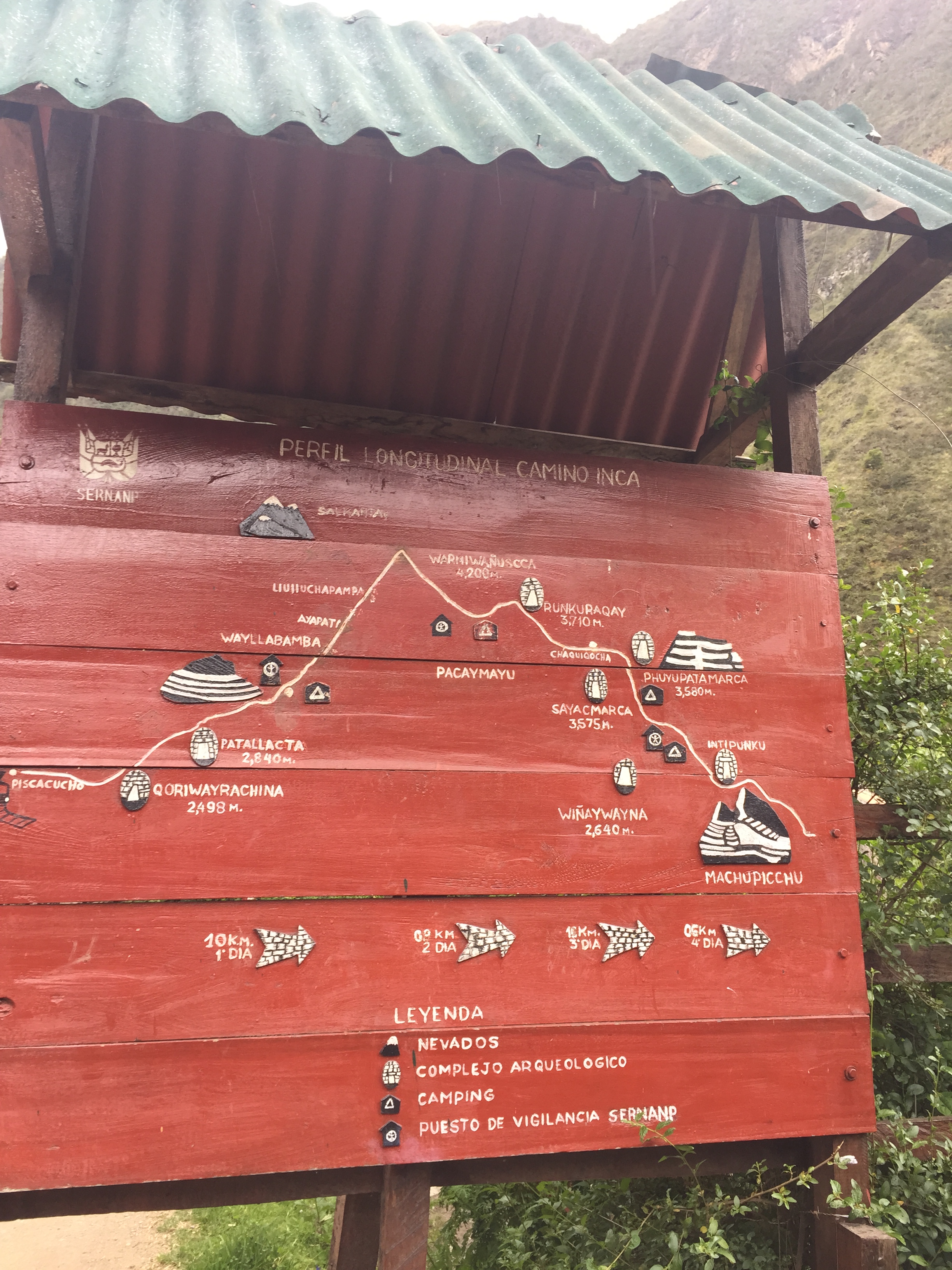
Packing for a trek is plenty stressful when you’re not entirely sure of what the weather will be. Because of school and work, the only time we could go happened to be early March, which is highly advised against by a majority of travel sites. This is because November to April is considered rainy season and the Inca Trail actually closes every February because of the heavy downpours. But, we scheduled a trek for early March and by God we were going to make it to Machu Picchu even if we spent 3 days in torrential downpour to get there. So, when I realized that we were definitely going to be caught in a rain storm at one point or another, packing went from semi-stressful to a full-on, life-consuming thing for me.
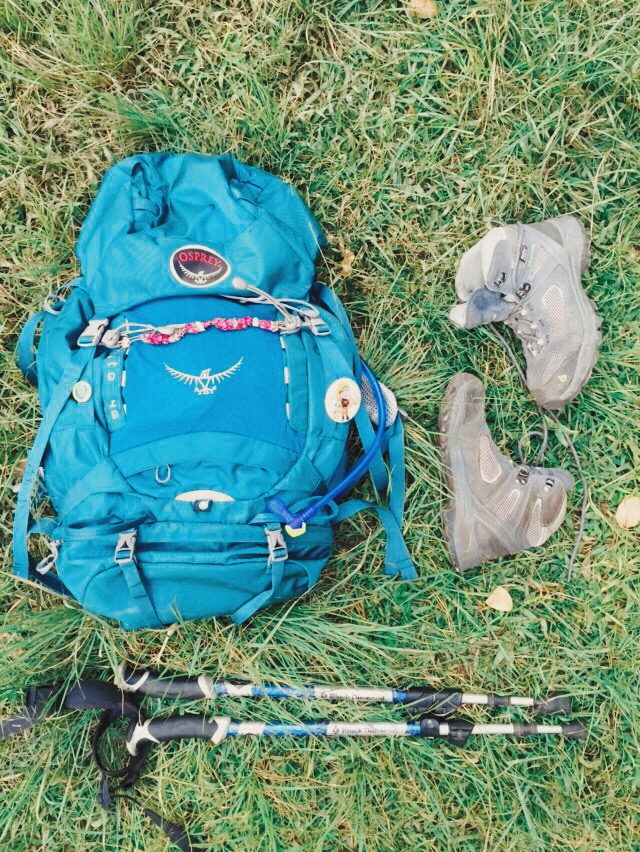 I read all the blog post and articles ever written on packing for a trek during rainy season, so I’m proud to say that I wasn’t wholly unprepared when I arrived. But, that doesn’t mean that I was completely rain-proof, either. I live in a location that is almost constantly in a drought, so I didn’t want to spend too much money buying the latest and nicest water-proof gear. Instead, I opted to either water-proof my own things, or do without and hope for the best. My spirit can rarely be dampened (no pun intended) by rain, so I felt that I could be physically miserable but still fairly happy emotionally and mentally. However, I definitely had to think more about my safety when packing, as even the smallest amount of rain could leave rocks incredibly slippery. With all the said, I’m going to share with y’all how I planned my pack, where I failed, and what I’d change next time around.
I’m kind of obsessed with making spreadsheets, so if I can think it, I can spreadsheet it. I am definitely put at ease at the sight of a beautiful spreadsheet. Unfortunately, my spreadsheet was definitely not beautiful, but it got the job done.
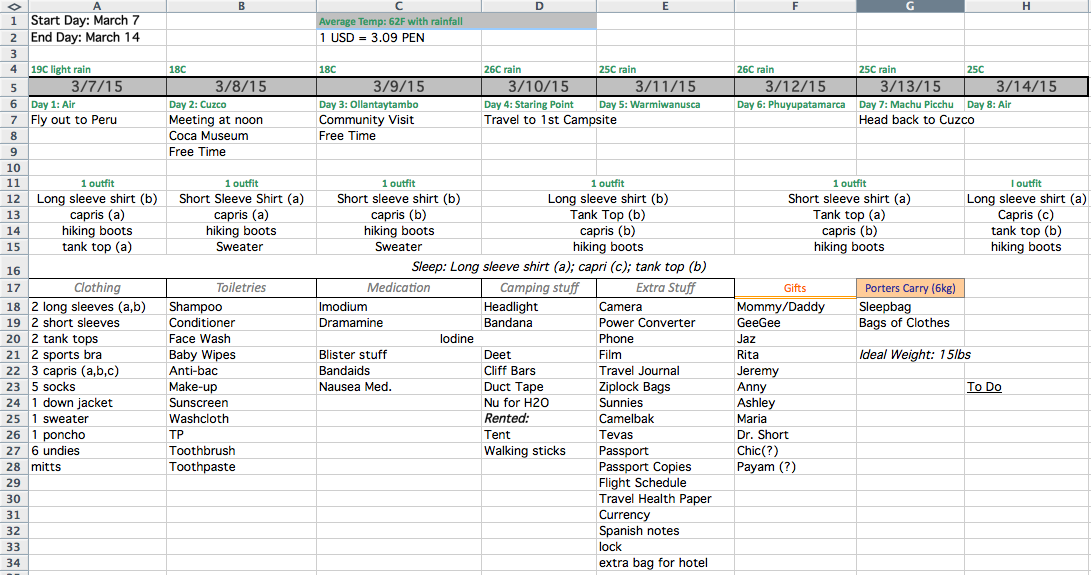
But, when I actually arrived I had to cross out a couple of things from my checklist (thanks to my terrible memory or realizing I just didn’t need some of the things on it). So, it looks a bit more like this:
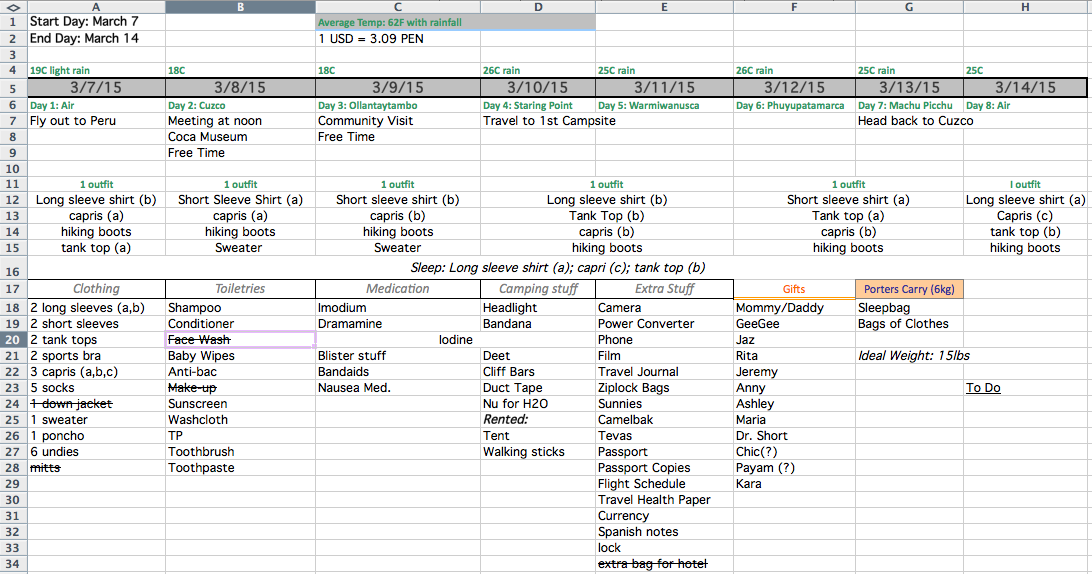
- I realized that I would only need to use facewash while I was in Cusco, and I could easily make do with my shampoo.
- I forgot to bring my light, water resistant down jacket (which made the nights a bit difficult).
- Everything I packed would be necessary on the trek, so there was no use in leaving anything at the hotel.
- Make-up? I don’t know what I was thinking.
- I brought some mitts, but never ended up using them.
While this list may seem a bit exhaustive, all together my pack weighed only about 15lbs (not including water), so I felt that that was a decent amount of things to bring. However, I definitely could’ve lightened it a bit more if I got rid of more of my clothes. You can read about my actual struggles on the trek here. So, I’ve come up with some tips on how to pack for the Inca Trail during rainy seasons, though I’m sure these tips are applicable in a larger number of treks and hikes.
Tip 1: Write a list of everything you want to pack and then decrease it by half
I think people tend to forget that they’re going on a trek and not just an average vacation. They end up packing way more clothes than they need, as if they’re somehow going to care if their clothes are clean or not by day 2. When I was looking on pinterest of possible packing list, I thought they included way too many outfits. For a four day trek you’ll realize that you really only need two changes of clothes: trekking clothes and sleeping clothes. On top of that, you can use your sleeping clothes as a relatively clean outfit for the final day, when you reach Machu Picchu. Since we were going in rainy season, I brought an extra outfit, in case one became soaked and needed to dry, which actually brings me to Tip 2.
Tip 2: Only pack clothes that will dry quickly
A majority of shirts I own are cotton, and cotton is one of the biggest no-no’s when hiking in the rain. Not only does it take forever to dry, soaks up water like a sponge, and will make your pack heavy if it’s soaked with water, but it also provides absolutely no insulation when wet. So, avoid cotton at all cost. The only cotton I packed was my hiking socks, which I felt like I had enough and were small enough for me to pack multiple.
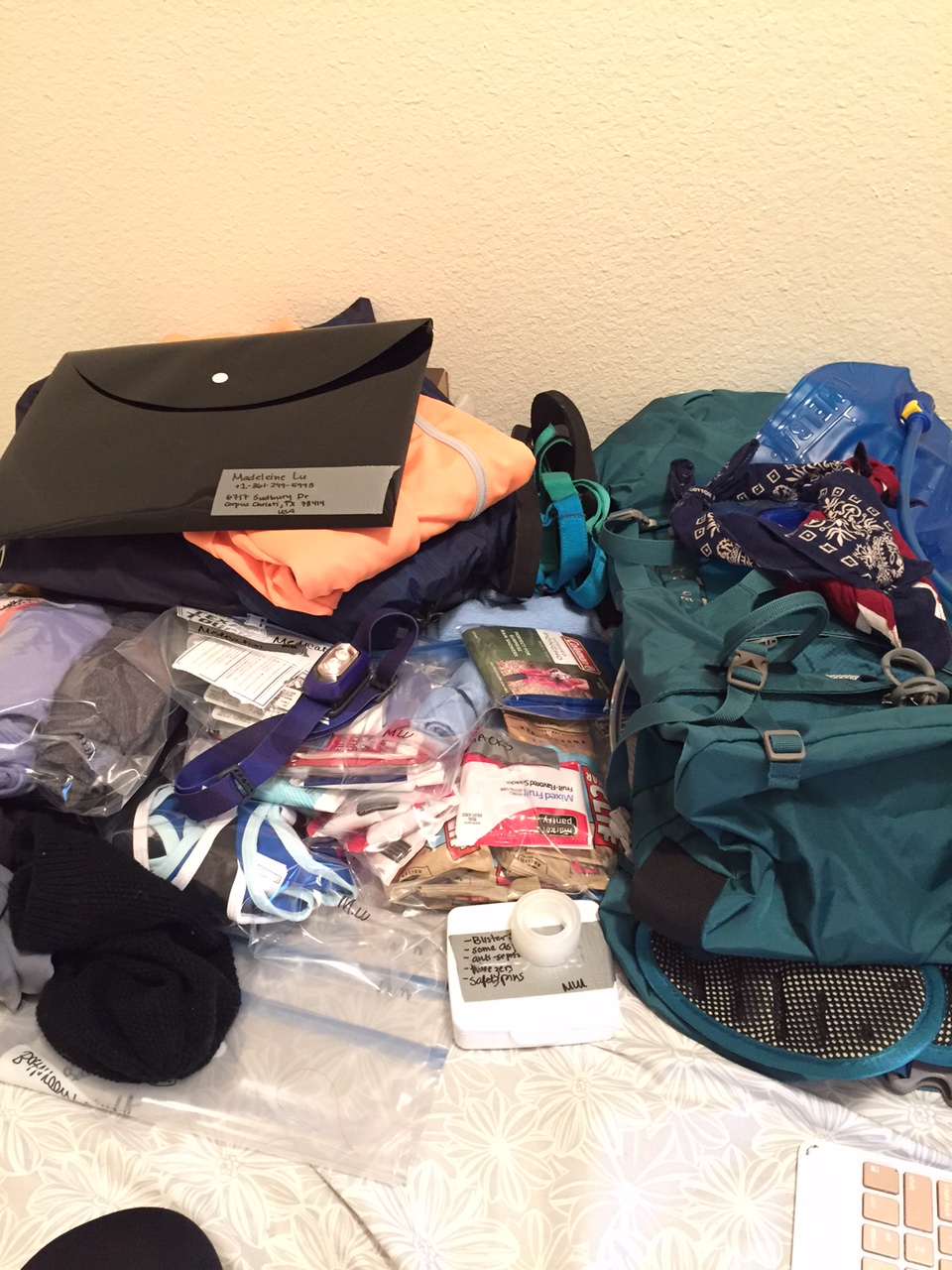 Tip 3: Water proof your pack even further by putting everything you own in ziplock bags
I don’t do the whole “packing cubes” business everyone seems to swear by, but I do try to compartmentalize all my clothes in large ziplock bags. Its a cheap way of organizing and water-proofing everything you own. Plus, I can squeeze out all of the air, which lets it take up less room in my backpack. The only thing worse than a wet backpack is if all of your clothes and electronics are wet, too. If anything became wet or smelled just wretched, I brought extra ziplock bags to throw them into.
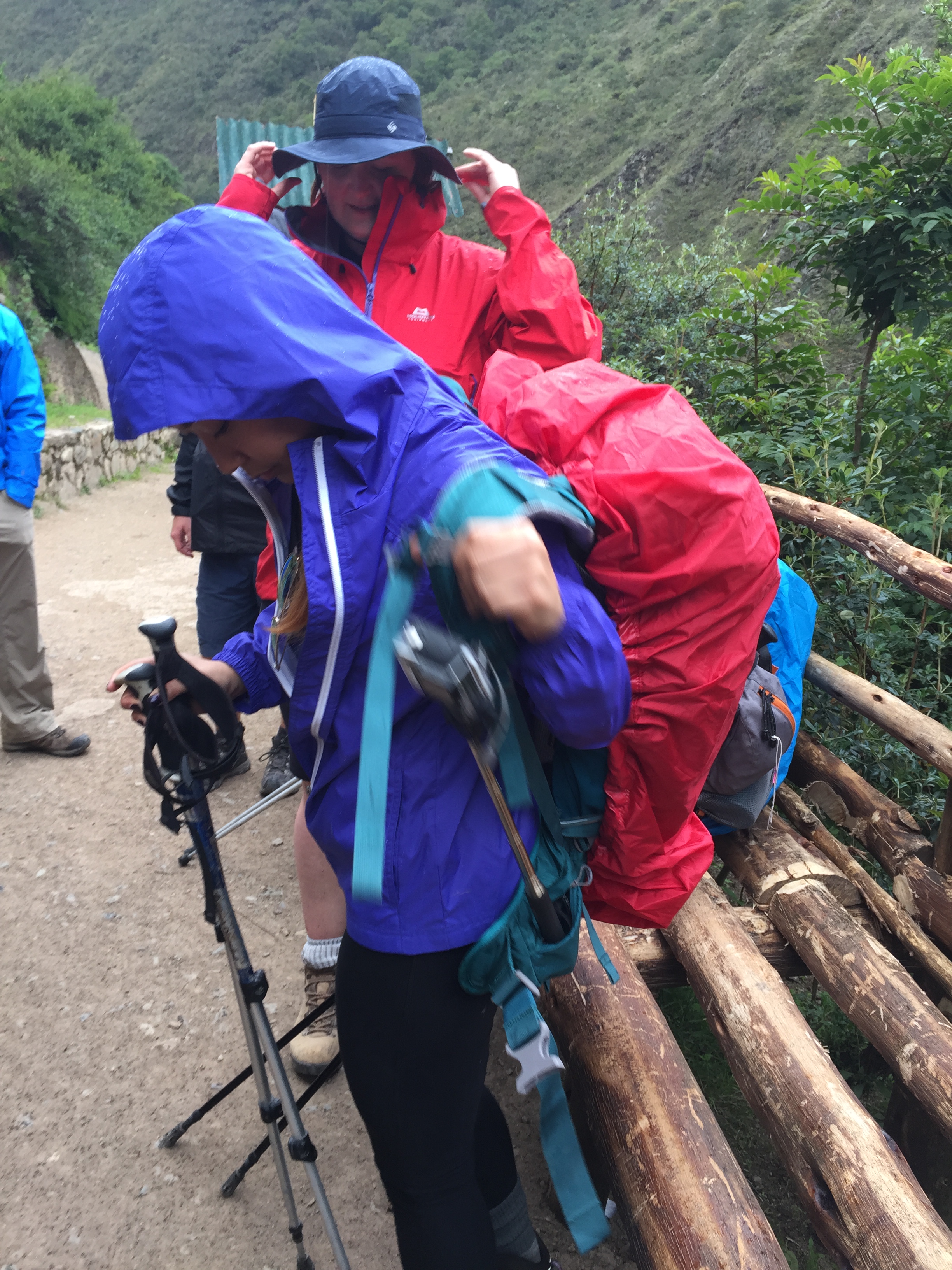
Tip 4: Invest in a rain jacket
Yes, you can always use a poncho, which I also packed because I didn’t want to spend money on rain pants, but the rain jacket provided just enough insulation and was easy to put on and take off. Because I’m a small female, I purchased a boy’s large rain jacket from Target. It wasn’t the most stylist, but it definitely got the job done.
Tip 5: Invest in water-proof boots
This one was a hard one for me because I already owned a pair of, what I believe, perfectly good hiking boots. I didn’t want to have to drop any more money buying something that I already had. But, I figured it would be a good investment in the future as it would allow me to go on more kinds of hikes more often. Again, because I’m a small female, I was able to buy kid’s versions of water-proof boots. Kids tend to be very reckless on the rocks, so I think it’s safe to assume that good kids hiking boots would have great friction and ankle support.
Tip 6: A poncho provides a good cover for your pack
My backpack actually came with a rain cover, but there were a good amount of people who used their ponchos to cover their packs. Its extremely cheap and gets the job done.
Tip 7: Just because its rainy seasons doesn’t mean there won’t be sunshine
Be prepared to go through a wide range of temperatures. Since you’re hiking up and down all day long the weather can quickly change from hot, humid, and tropical to foggy, damp, and cold within an hour. I felt like I was constantly putting my rain jacket on just to take it off 20 minutes later. Pack things that you can layer and keep your rain jacket in a place thats easily accessible.
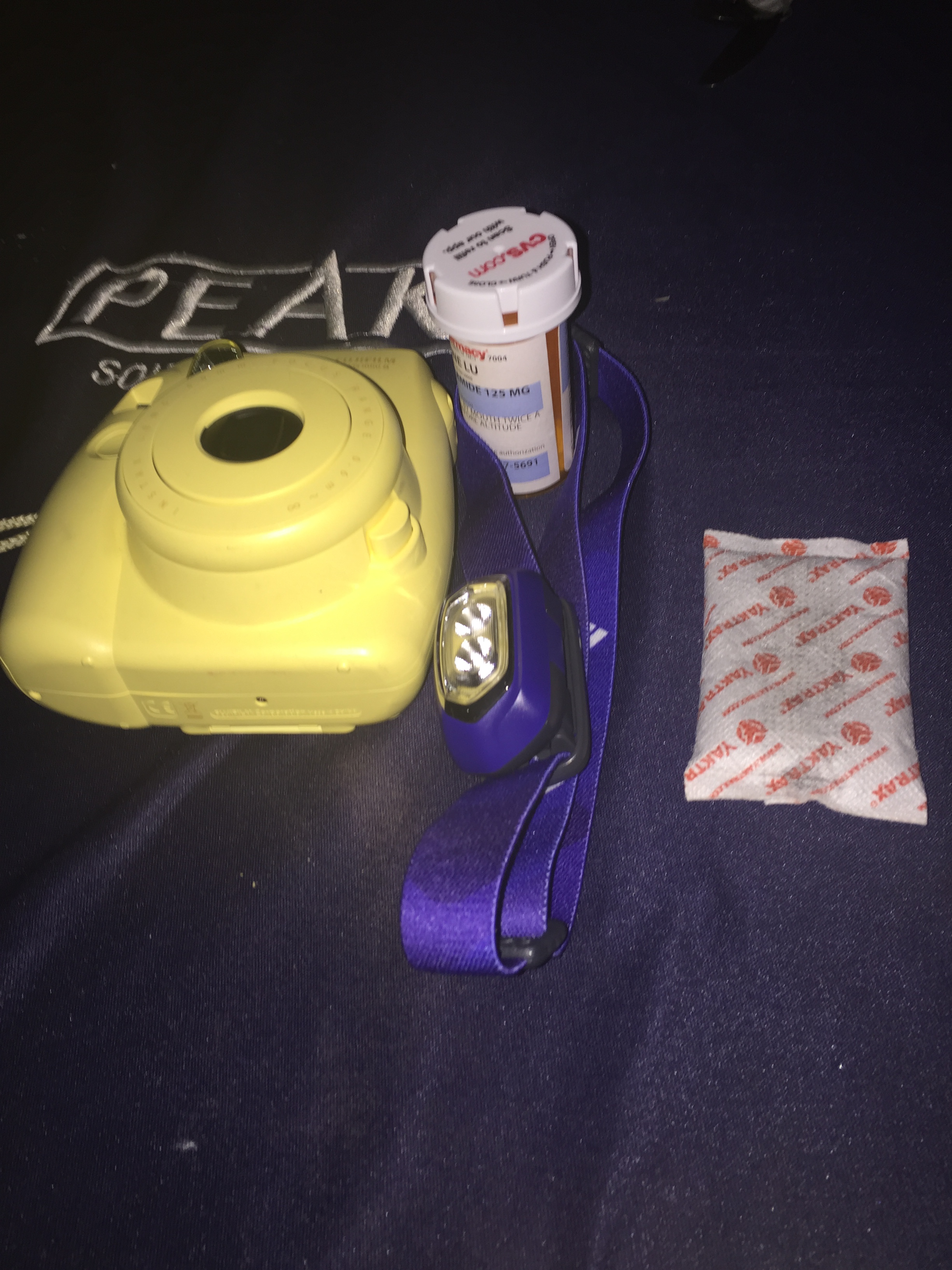 Tip 8: It gets extremely cold at night time
Maybe it’s because I’m from the south, where the coldest night I’ll ever experience is about 4C, but I spent the nights in the mountains waking up freezing. Luckily for me, my sister packed some hand warmers that I would stick into my sleeping bag for extra warmth.
Tip 9: Mosquito-proof your gear and clothes
Those mosquitos are no joke. I’m allergic, so it was incredibly important for me to mosquito-proof everything I had, but I didn’t mosquito-proof the backs of my capris and was bitten twice. It took maybe 2-3 weeks for the swelling to disappear. Just to be safe, I’d advise permethrining you’re gear. Permethrin can apparently last up to 6 weeks (or five washes), but it’s pretty toxic. I used it because I’m allergic and it was easier than spraying myself with deet every five hours, but it’s not necessary if you’re worried about the toxicity or can’t find where to purchase it.
Tip 10: Baby wipes will make you the cleanest one at the campsite
Every night, before changing into my sleeping outfit, I would use about 2-3 baby wipes to “clean” myself. It’s extremely refreshing to be able to wipe your face after a long day. I actually pack baby wipes any time I go on any kind of trip because they’re so light weight and they barely take up any space.
I can probably go on and on about where I failed, but overall I think I did pretty well. I’m satisfied with everything I had in my pack and I utilized everything I brought sometime during the trek. Everyone is different, and we’ll each prioritize necessities differently, but I hope this at least provides you with a rough outline of what you might need or what you might not need. I did do this trek during one of the wettest months in Peru, so obviously if you’re doing this trek during a dry season, you can change a couple things here and there to better suit your needs.
 gogomaddie