You’re casually strolling through your instagram feed filled with travel bloggers and that’s when you found your newest travel inspiration. A tall, tanned, and beautiful female having the time of her life in Thailand, caught mid-laugh while riding an elephant. You think to yourself “wow that looks like a lot of fun” and it probably is, if only you knew the the true cost of riding an elephant.
When it comes to tourism, if an animal is involved you can almost always assume it is being inhumanely treated. Have you taken a selfie with a tiger? Paid a monkey to sing and dance? You’ve probably contributed to animal cruelty. So, in part 1 of my “Is your holiday ethical?” series I bring to you commonly abused and mistreated animals in the tourism industry.
Elephants:
Elephants are beautiful, godly creatures and their bodies are an amazing creation of centuries of evolutionary advances, few of which attributed to humans as a major predator. As seemingly gentle giants, they have been abused and used for all facets of tourism:
- Riding elephants
- Circus elephants
- Elephant poaching
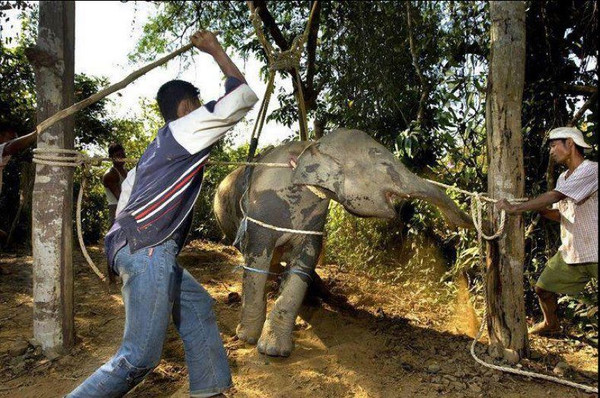
In the three examples above, the elephant’s spirit must be crushed and the elephant must become submissive to the human. Elephants are trained to perform silly circus tricks through persistent corporeal punishment. Furthermore, they are often kept in small cages and given food unsubstantial to their native diet. An elephant’s trunk is essentially his or her lifeline. This extremity acts as arm, nose, and mouth to the elephant and it is absolutely vital to the elephant’s survival and well-being. Training the elephants often involve abusing this by restricting the elephant’s use of it’s trunk. Elephants used for riding also suffer from many bone defects from the constant heavy loads of weight it must carry and from living in conditions substandard to the wild. As many people might forget, elephants are actually wild animals, which means that you can never truly “train” it. Just this year, a man was killed by the elephant he was riding after the elephant “turn on his trainer.” If you ever find yourself contemplating how great it must feel to sit on top of an elephant, hopefully this picture below will remind you of the reality behind elephant tourism.
Tigers and Lions:
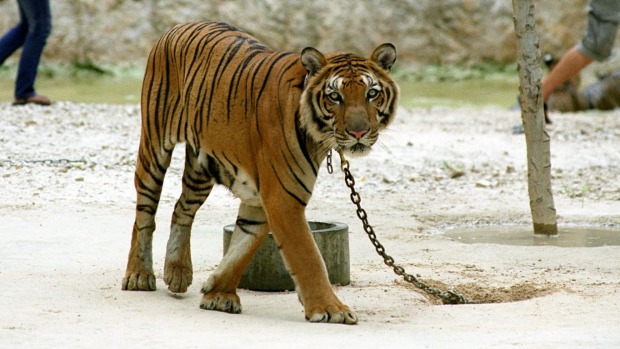
There was a rising trend I saw recently about taking selfies with tigers and lions. The “tiger selfie” has become such a popular thing, there is even a tumblr blog dedicated to posting tinder profiles of guys with tiger-selfies. What the selfie-taker might not have known is that that tiger was probably drugged into compliance because no normal, healthy tiger would be okay with taking a selfie. These tigers and lions were initially stripped from their mothers when they were cubs just so that they could be placed in a petting zoo. There are even some places that overbreed lions so that they can use the cubs for tourism. Once these cubs are grown and no longer small enough to be kept in a petting zoo, they are sold to be hunted by wealthy clients. These majestic animals are kept in subpar living conditions so that tourist can have the experience of touching a wild animal. Here is a video showing a tiger sedated and beaten while a family takes their photos with it.
Luckily, you can still bask in the warm glow a tiger and a lion provide because there are plenty of places that work towards tiger and lion conservation. These places even rely on tourists to come and pay to look at their tigers/lions. While just seeing a tiger might not be as attractive as scoring a new picture for your tinder profile, these tiger sanctuaries are necessary for repleting the diminishing tiger populations. So, if you plan on seeing a tiger or a lion sometime in the near future, opt for places known for their conservation and not their low prices and promises of the coveted “tiger-selfie.”
Whales, Dolphins, and Sharks:
It is really astounding that we as humans can feel the need to capture a wild sea creature and force it to do tricks. While many will argue that keeping whales and dolphins in captivity is beneficial for the purposes of education, conservation, and research, the obvious and ultimate reason behind it is financial gain. It is impossible to simulate the unique environment the ocean provides. Whales and dolphins naturally require vast spaces to swim and fellow whales and dolphins to communicate with. These animals do not breed well in captivity, act and communicate differently in captivity, and develop differently in captivity. Most research being done on dolphins and whales suffers from a flawed design plan if the goal is to discover how these sea animals naturally behave. Instead, research on captive dolphins and whales is primarily focused on how to condition these animals to living longer lives in captivity. If these dolphins and whales were not stripped from their families in the wild, they were born in captivity. Therefore, these animals born in captivity will probably never be sent into the wild. Another type of tourism popular in many central and south American destinations is swimming with the dolphins. Though the allure of being amongst these sea mammals is definitely enticing, one should know that these dolphins were plucked from their families at a young age and trained to be dependent on their handlers.
Having dolphins and whales perform circus tricks in and out of the water has absolutely no educational value. Instead, it is inhumanely exploiting these animals for entertainment under the thin guise of “educating the audience.” These organizations should be more focused on educating about the real danger dolphins and whales face: human interaction. Entanglement, habitat loss, commercial harvest, and climate change all lead in reasons certain dolphin species are now endangered. Certain organizations (read: Seaworld) have made claims that their sole purpose is to protect animals. However, the sinister undertakings behind the grandeur of a whale jumping out of it’s pool were exposed and brought to the public’s attention. This led to an outcry against Seaworld and multiple petitions to have them close their orca programs. Recently, they have agreed to end their orca breeding program, showing everyone that the public really can make a difference.
Unlike the whale and the dolphin, no one has successfully trained a shark before. Instead, there are such practices as shark finning. Essentially, a shark’s fin is considered a delicacy in China and therefore sought out by many fishermen for profit. However, the rest of the shark’s body is often considered useless. It is not uncommon for a shark to have it’s fins clopped off before being thrown back into the water to die a cruel and painful death. The practice of shark finning is so widespread, certain shark species like the scalloped hammerhead and the smooth hammerhead are now considered endangered species. Dramatic declines in shark populations could damage the state of the natural food chain our oceans rely on. Although sharks don’t get a highly popular documentary of them, they do get some very famous ambassadors, and thanks to Yao Ming shark finning is down by 50%.
The easiest way to not contribute to the abuse of sea creatures is simply by not attending shows were dolphins and whales are performing and by not eating an endangered (and soon to be endangered) species.
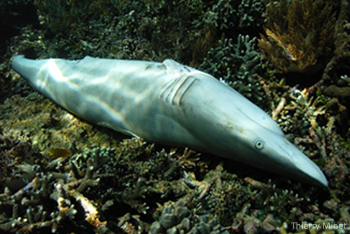
Also, for added rage: a video of a baby dolphin dying because it was being passed around for selfies.
Though there is a never-ending list of tourism sites that allow you to unethically interact with animals, there are plenty of eco-friendly and sustainable organizations that humanely treat their animals and truly focus on conservation. I believe that as tourist to a foreign land it is our duty to be both responsible and respectful visitors. Therefore, I implore you to think twice about supporting an organization that exploits animals for economical gain. These unethical practices are only allowed to continue as long as there are people willing to pay to participate in inauthentic and inhumane experiences.
All photos are linked to their original websites.
 gogomaddie